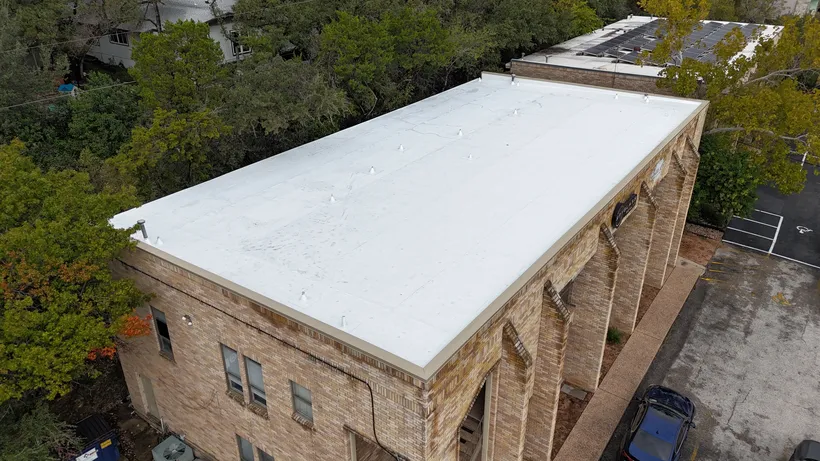








Drone view of a two-story tan brick office building with a new white flat roof, among tall trees

Commercial roofing across Texas

Full replacement, repairs and service agreements for property managers and building owners. TPO, EPDM, modified bitumen and standing seam metal. Roofing only.

Who we work for

Nearly all of our commercial clients are the building owner or the property manager. We also work with general contractors on new builds.

  • Office
    buildings

  • Retail
    centers

  • Multifamily

  • Warehouses

  • Industrial
    facilities

Our commercial work is roofing only: full replacement, repairs and service agreements. No interior work.

Where flat roofs start to leak

Most leaks start small: a seam, a piece of flashing or a blocked drain.
A service agreement finds them before they reach the insulation or the deck.

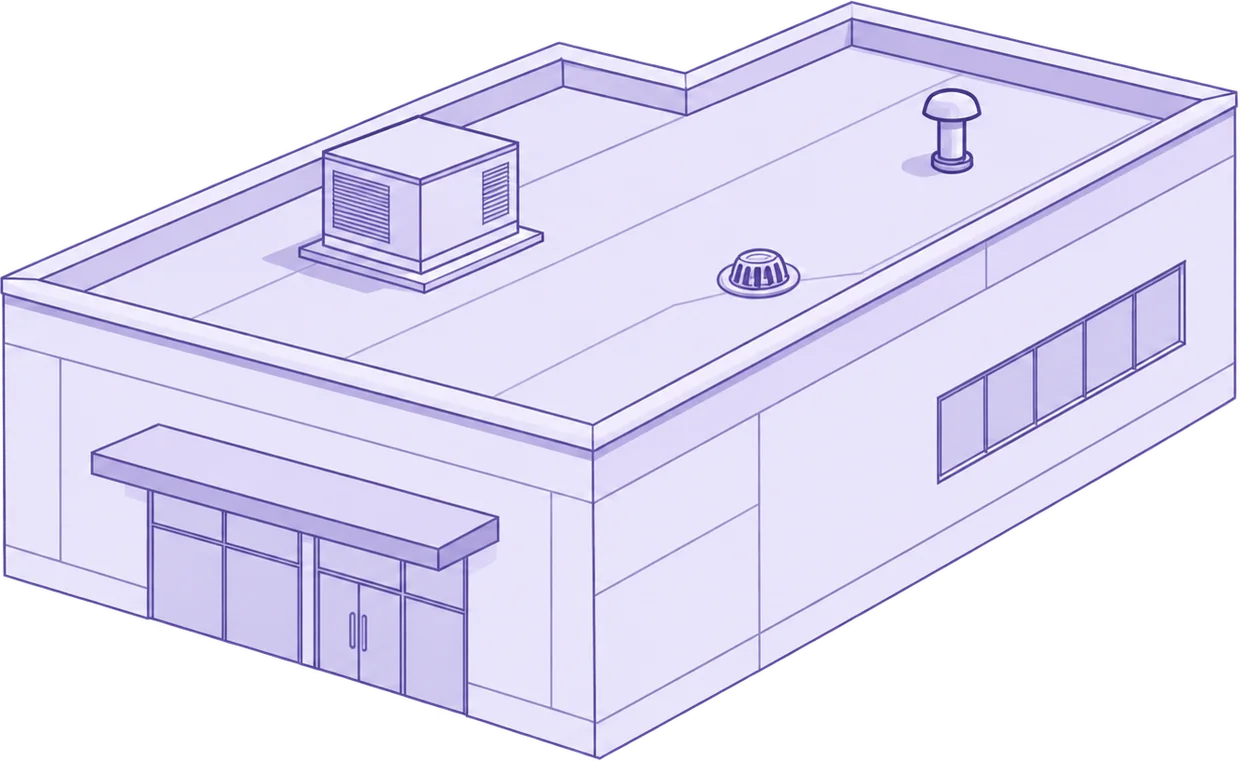
A flat roof from above: the membrane laid in strips, two drains with the roof sloped toward them, three AC units and the low wall around the edge.
  1. Seams

    Over time a seam can separate and let water in under the membrane.

  2. Roof edge flashing

    Loose flashing where the membrane meets the wall lets water in behind it.

  3. Around equipment

    Flashing around AC units and pipes can work loose over time.

  4. Drains

    A blocked drain leaves water standing on a low-slope roof.

  5. Ponding water

    Standing water on a flat roof wears the membrane faster.

  6. Punctures and cracks

    Damage to the membrane lets water reach the insulation and the deck.

Service agreements

Scheduled visits that catch those small problems early. The schedule is set around the building, its size and its roof system.

  • Scheduled inspections

    Membrane, flashing, drainage and surface condition, on a schedule set for the building.

  • Leak detection

    We trace moisture entry points and correct them before they spread.

  • Preventive repairs

    Sealing, flashing adjustments and surface corrections, while they are still small.

  • Drainage and debris

    We check drainage paths and clear debris that blocks runoff.

Four roof systems

We recommend a system based on the structure, the drainage and how the building is used.

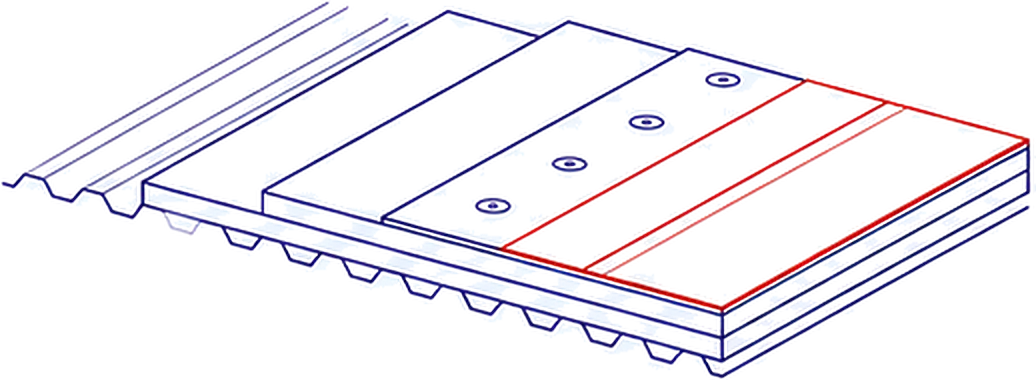
Cutaway drawing of a TPO roof: corrugated steel deck, two layers of insulation, a fastened cover board and the membrane on top

TPO membrane

A single-ply membrane for flat and low-slope roofs. Its reflective surface can help keep heat out of the building.

What we repair: punctures, seam separation and membrane damage.

Cutaway: Steel deck, two layers of insulation, cover board and membrane with welded seams.
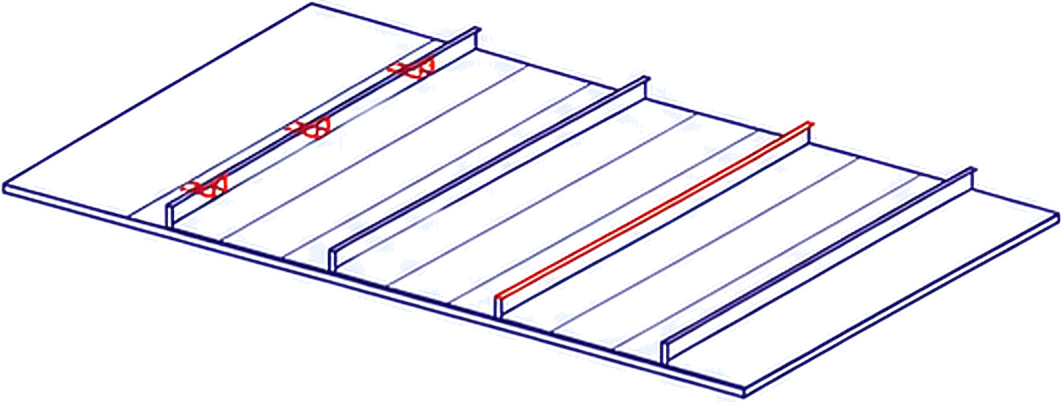
Cutaway drawing of a standing seam metal roof: the deck, the clips that hold each panel, and the panels joined at raised seams

Standing seam metal

Metal panels joined at raised seams, for buildings where that system fits.

What we repair: loose fasteners, panel separation, corrosion and flashing.

Cutaway: Deck, underlayment, panel clips and metal panels with raised seams.

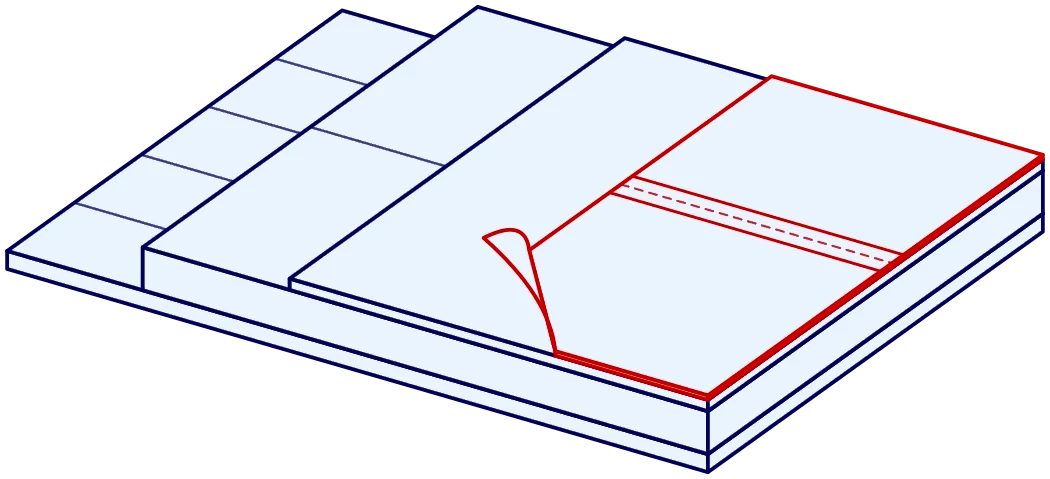
Cutaway drawing of an EPDM roof: wood deck, insulation, a cover board and the rubber membrane on top, with a taped seam and one corner peeled back

EPDM membrane

A single-ply synthetic rubber membrane, black or white, made to handle wide swings in temperature.

What we repair: punctures, seam separation, shrinkage at the edges and flashing.

Cutaway: Deck, insulation, cover board and rubber membrane with taped seams.

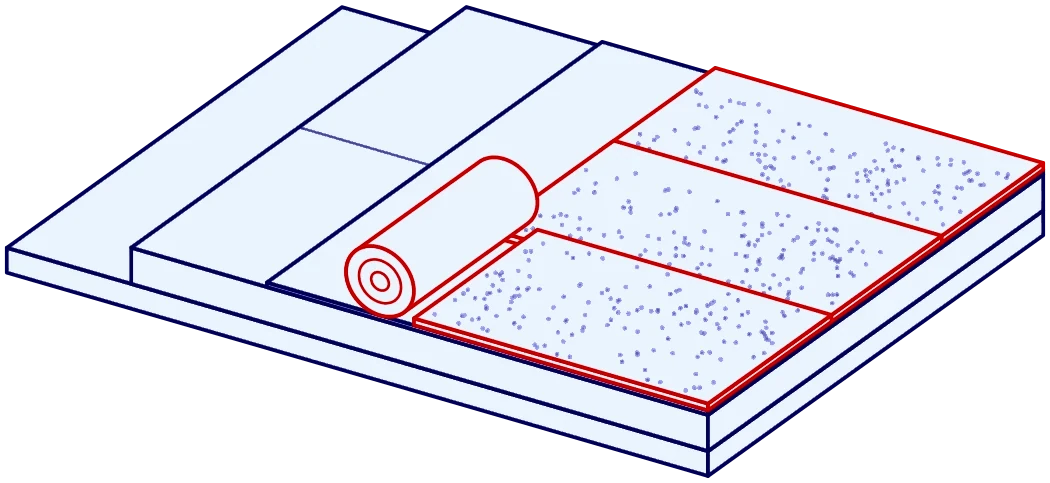
Cutaway drawing of a modified bitumen roof: the deck, insulation, a base sheet and granule-surfaced cap sheets laid in overlapping strips, with a roll of cap sheet being laid out

Modified bitumen

An asphalt-based roof reinforced with fiberglass or polyester, laid in layered sheets that are torched, set in cold adhesive or self-adhered.

What we repair: blisters, split seams, worn surface granules and flashing.

Cutaway: Deck, insulation, base sheet and cap sheets with overlapped seams.

  • Full replacement

    We remove the aging membrane, insulation layers and flashing, then build the new system to suit the structure, the drainage and how the building operates.

  • Targeted repairs

    When the rest of the system still has life left, we repair the problem and check the decking and supports around it.

  • All of Texas

    We work on commercial roofs statewide from our offices in Round Rock and Southlake.

Solar is part of our commercial work as well. Ask us what we offer when you call.

Roofing over a building that stays open

  • Scheduled around
    the business

    We plan the work to keep disruption to the people inside the building low.

  • An organized
    job site

    We keep the site in order so the building can keep running.

  • A timeline
    before we start

    You get a set schedule before work begins, so you know how long it will take.

  • Our own
    crew

    Our in-house team does every job, so one company answers for the work.

Commercial roofing questions

What commercial roof systems do you work on?

We work on four systems: TPO membrane, EPDM membrane, modified bitumen and standing seam metal. We recommend a system based on the structure, the drainage and how the building is used.

What does a service agreement cover?

Scheduled roof inspections of the membrane, flashing, drainage and surface, leak detection, and preventive repairs before small problems get bigger. The schedule is set around the building, its size and its roof system.

Do you do interior work on commercial jobs?

No. Our commercial work is roofing only: full replacement, repairs and service agreements.

Where do you work on commercial roofs?

All of Texas, from our offices in Round Rock and Southlake.

Request a commercial roof inspection

Round Rock office

(512) 975-1599

DFW office

(817) 674-1494

Mon to Fri, 8 am to 6 pm

What happens next

  1. Inspection
  2. Planning
  3. Installation/repair
  4. Final walkthrough

Free roof inspection request

What do you need? Pick any that apply.

Have your insurance report? Pick Free inspection to go over it with a pro.